Showing posts with label work. Show all posts

Thursday, 8 November 2012

An Indian education

Last week I was in Bangalore for a week's training. I'm a policy wonk by background, and that's very much my focus in my job here, but I am also a member of the management board of the UK-Indian joint venture company I work for. Which means, horror of horrors, that I have to show some kind of insight into business matters as well as making earnest statements about evidence-based approaches and public goods.

Most of the time this isn't a problem. I actually quite enjoy switching from policy to business mode, thinking strategically about business issues and spotting where the new opportunities are (clue: in the skills business in India, they are everywhere, but finding the ones that will actually allow you to break even is trickier). Besides, in my line of work the line between business and policy is very blurred: education businesses have to keep public benefits at the heart of what they do or they quickly lose the faith of their customers; conversely, they have to be businesslike or the market will simply eat them alive. So policy affects business, and business affects policy. That's even more the case in India, where training is just taking off and the gold rush is just beginning.

Anyway, I digress. My point was that I was mostly fine tackling business issues, except for one rather important point: numbers.

I don't mean I can't do maths. My maths is actually pretty OK, although algebra beyond x=2y can still sometimes induce mild hysteria if I don't take some deep breaths first. What I struggle with is finance. As soon as those enormous spreadsheets appear on the power point, with lots of months and decimal points and terms like EBIDTA, something tends to switch off in my brain. I know I should follow it. I know the numbers aren't that difficult. But the spreadsheets are just so big. And there are so many columns. And can't we just talk about how policy fails to incentivise enough employers to offer apprenticeships? Please?

So to cut a long story short I decided I needed to find a course on finance for people who will never - god forbid - actually work in the field, but who need to be able to go to a board meeting and talk intelligently about performance against AOP and so on, without being reduced to a quivering pile of jelly. And so it was that I spent last week putting in 11 hour study  days at the Indian Institute of Management Bangalore.

If you want to see how serious India is about business, go to IIMB. I went to a pretty good university and I have some very, very clever friends, but this was some of the best teaching by some of the smartest people I've ever come across. It was intense, it was exhausting, it left me feeling like my eyes were propped open with sandpaper - but god, it was good. And to my enormous astonishment, it also managed to be really, really interesting. I can't say I can now confidently reel off all the principles of financial management, but I am fairly sure that the next time I'm in the board room it'll be with my head a lot higher than before.

Let me just say this again: these people made me find finance interesting. That's rather like managing to convince Ann Coulter that actually, Barack Obama isn't such a bad old stick.

Sitting in classrooms like those at IIMB it's hard to imagine that India isn't following a manifest destiny to become the most successful and largest economy in the world. But the fact is that, on current trends, it isn't. The pockets of superb quality education like IIMB exist in a sea of educational underachievement; the brilliance of the faculty (and some of my fellow students) has to be set against a system where vast numbers complete their education without sufficient capabilities to be employable. India excels at excellence, but it currently fails at adequacy.

In my last post I commented that some of the social patterns in India remind me of some of the damaging trends seen in my own country and in the USA, trends that are associated with high levels of inequality. This strikes me as another one: in all three countries there are pockets of academic brilliance, with truly world class people and incredible results, but swathes of the population are left behind completely. And the problem is that academic brilliance alone isn't enough. Sooner or later all those people will need people who are brilliant in other ways. The people who probably won't ever lecture a room full of businessmen about macroecnomics or create innovations in nanotechnology, but who will make sure the people that do those things live in a world that works - and will do so by achieving high level skills that may lack glamour, but that are sorely needed.

All three countries are committed to developing skills at all levels and to offering opportunities to all. But sometimes I wonder if that's enough. In a world that idolises a privileged minority of celebrities and business leaders, and emphasises material gain as the way to happiness, who'd want to become a hotelier or a plumber? Who'd want to settle for just being an ordinary, successful person? And who, when they realise they'll never earn a seven figure salary or appear in Hello!, wouldn't be tempted to just throw in the towel altogether? Policy commitment to diversity of skills and opportunity may not be enough in the face of a modern culture that sometimes seems geared in entirely the opposite direction.

The more unequal we get, the more aspiration is narrowly defined, the more the middle is hollowed out, and the less liveable our societies become. And that's a challenge India has in common with a lot of places that, superficially at least, it looks nothing like.

Saturday, 28 July 2012

A Building Site in Bangalore

Spending all day on a building site in Bangalore may not be most people's idea of a reason to feel grateful for life's opportunities. But that's what I did on Wednesday this week and that's how it made me feel.

I was down in Bangalore supervising the pilot stage of a research project we are doing at the moment. I won't bore you with the details, but it involves evaluating an initiative undertaken by a local NGO to assess the skills of labourers working in the informal construction sector. There are a lot of people doing this kind of work in India - putting in long, hard hours - and they live a fairly precarious existence, traveling wherever the work is and with no contractual protections. They've very rarely had any kind of formal education and the skills they have have been picked up on the job, with no formal recognition at all. So the idea of the project is to recognise and certify their skills, facilitating access to work and further training, as part of India's wider efforts to train its population. As a policy specialist, most of my work is done at a computer or in meetings; it's not all that often I get to see what's happening at the ground level. This was a rare exception.

Building sites in India are, by and large, hot, dusty, noisy and relentless. There's often very little shade. The workers slog under the sun before squatting in the unfinished buildings to eat their lunch. Underfoot is pretty much a mass of rubble; strange struts of metal stick at random angles out of bare concrete staircases. Mechanisation is usually minimal; bricks are either carried up flights of stairs on people's heads, or hauled up by pulleys. This is not an easy existence.

In Bangalore, there was a girl in a red outfit with a toddler hoisted on her hip. She looked about seven or eight at most. My colleague from the local NGO asked why she wasn't in school; she ducked her head and wouldn't say a word. Her father explained that he couldn't afford to send all of his children to school. Some would get an education, some wouldn't, he said. She was needed to take care of her little brother. Like her parents, she will probably remain illiterate.

We interviewed a number of workers for the pilot. Of course I couldn't understand what was being said, but a translator was to hand. At one point, one said that "the big people" had come and asked him to take the assessment. Big people, I asked? He means the NGO folk, I was told. But we are all big people to him. We have an education.

I didn't feel like a very big person at that point in time; I just felt like a very lucky person. I wanted to ask, does that mean he sees himself as a small person? Is that just accepted? But I felt foolish. There's no way I can understand the perspective of someone whose start in life has been so utterly different from my own. And no amount of liberal hand-wringing about inequality or caste can change the fact that, for him, that's just the reality of his world.

Our research partner commented that he thought it was impressive that I was willing to come to places like this; most people wouldn't bother, he said. I tried to explain that I see it as an extraordinary privilege. In my work I've had the opportunity to meet village women in Ghana, labourers in India, policy makers and researchers from countries across the world. Every one brought fresh perspective to me and enriched my world. I know that the villagers and labourers will never have the chance to broaden their horizons in the way I have, and that their lives will likely be hard until the day they die. Meeting them, even briefly, is humbling and something for which I'm incredibly grateful.

Back home, my friends are posting about their excitement at being part of the Olympics, and I have to admit to feeling a twinge of regret at not being there to participate in the spectacle. But on the whole, I'm glad I'm here instead.

Wednesday, 22 February 2012

Life on the Beach

This blog is starting to feel less like a blog about Delhi and more like a travel blog, which is largely because the first three months of this year have mainly consisted of me dashing about from place to place on work trips like a moth in a lightshade. This has benefits (I've got to see some really cool places) but I'm also feeling pretty knackered, truth be told, and looking forward to mid-March when things settle down a little bit and I will stay in the same place (ie Delhi - remember?) for a little while.

Anyway, I am currently in Chennai for a conference. I can't say much about Chennai other than it has horrendous traffic (surprise, surprise) and a conference venue that suffers from power failures every half an hour and was visited, during the two days I was there, by at least three pigeons, two lizards and a bat. When I was making plans for my visit, though, I thought I'd be clever and go down a bit early so I could have a weekend at the beach first. So I booked myself into a nice little hotel in Mamallapuram, a couple of hours south of the city, and looked forward to two days of sun and relaxation. 

Unfortunately, my little escape coincided with the dawn of a shed load of deadlines for work. I ended up spending a lot of the weekend huddled behind my laptop in my room or in the hotel restaurant, intermittently talking at length into my mobile phone about market strategy, while horribly relaxed-looking people in flip flops wandered past me wondering if I'd wandered into the wrong universe by mistake.

Bah.

I did manage to make a bit of time to explore the town and its beautiful temples, which have some of the loveliest carvings I've seen in India (and which I'm leaving for a separate post), and to at least walk along the beach and take a few photos. Enough to convince me that (a) Mamallapuram is a nice little town that I'd like to visit one day without my laptop; and (b) there are probably not many people other than me who would be daft enough to bring a laptop to Mamallapuram.

I've seen touristy India before: Varanasi, Amritsar, Mumbai and of course Delhi itself are firmly on the circuit. But I've never been anywhere that felt so much like a tourist town - a paid up part of "the kingdom of Backpackistan" as the Lonely Planet aptly puts it. Partly this is because it's so small - only 12,000 people - but also it's because it has places called "the Bob Dylan cafe" and more shops selling necklaces made of shells than you can shake a stick at.

It's also possibly the first place I've been in India where foreigners are so common in proportion to the resident population that no-one turns a hair when they see another one. Even when I passed kids playing in the street, and braced myself for a barrage of "hellllloooooooo! What is your naaaaame?!", they just glanced up, dismissed me as uninteresting, and carried on with what they were doing.

It was a relief. It was also oddly disconcerting. I felt like an aging pop star realising that the kids don't know who he is any more.

Anyway, Mamallapuram has a nice laid-back feel to it as befits a small town with a lovely beach, but it's also very much a working Indian town. The sands are not pristine and they are littered with fishing nets and boats, while the ladies of the town make their way serenely across the sands with huge jars balanced on their heads and nary a stumble (an achievement on concrete, but on a beach? Phenomenal) and the ever-present cows wander down for a sunbathe. I really liked it, and while working all weekend was not ideal, it was certainly a better place to do it than the office in Delhi.

I think this may be my favourite India photo yet. He was actually sat on quite a wide strip of sand between two piles of nets, but crouching down changed the perspective and makes him look lost in a sea of green. I love bold colours in photos and shots that make something seem quite different by altering its context. I feel like this one really works!


I was quite jealous of this guy. Ironic, given that my start in life was so much more privileged than his (there are plenty of kids in India who have been born with many more advantages than I was, but I'm pretty sure this isn't one of them). But he took such pure and simple joy in running on the beach with his kite. Looked like a nice place to be a kid from my perspective.

The houses in Mamallapuram are almost all brightly painted, which in the Tamil Nadu sun just makes you feel really happy.

Obligatory cow photo. I liked the purple wall too.

That's the most famous of Mamallapuram's temples, the Shore Temple, in the background. More on that later.


Quite pleased with this shot too! I love the fact that their clothes match the jars they are carrying, though I don't think it was deliberate.

Cow, looking lost.


Fishing gear on the beach

Mamallapuram sea front seen from the Shore Temple

This is a guitar on the wall of a cafe in town. I thought it looked kind of surreal (and I liked the yellow - are you getting that I like colour?). 

Wednesday, 21 December 2011

Foreign-for-hire

A few months ago, I was attending a not-particularly-enthralling conference on skills development in India when my phone rang in the middle of the opening session. On the other end was a lady from an Indian TV production company.

"Hello sir," she chirruped, "I got your details from the organisers of the Short & Sweet theatre festival. We need a foreigner to appear in our programme. Can you come to our studios in an hour?"

She seemed genuinely perplexed when I explained that I had a job, was indeed in the middle of said job at present, and that in any case an hour's notice seemed a little bit ambitious given that getting anywhere at 10 am on a weekday in Delhi is pretty much guaranteed to take at least that long. Anyway, I politely declined, resisting the temptation to ask what the requirements were beyond being A Foreigner, and returned to the less-than-fascinating conference.

A couple of months later it happened again. This time it was during the theatre festival, and I was backstage about half an hour before curtain up. It was a different (though equally chirpy) lady from another production company. "Hello sir," she warbled, "I hear that you are a director and stage manager for the Short & Sweet theatre festival. We would like you to come on our programme about whether Indians are becoming less tolerant, to give a foreigner's perspective. Can you come to our studios in an hour?"

I explained patiently that yes, I was indeed stage managing the festival, and indeed was in the process of doing so at that very moment, so consequently I would not be able to accept her kind invitation. Again, she seemed quite perplexed that I would turn the opportunity down. I was tempted to ask why she thought I had any credentials or credibility on the subject of the programme, having only been in the country for a few months, but I had furniture to move around, so I hung up.

Many expats will be familiar with the phenomenon, living in a country that lacks a history of major immigration, of being feted by the media simply because you're from somewhere else. It happened in Korea too, but I suspect it is even more common in India because the language barriers are so much lower. Consequently you get approached for all kinds of things that would be unlikely to happen somewhere where English is less widely spoken.

Back in September, I was called by a director looking for an actor for his play, who needed to be Caucasian. I sent him my CV; he sent me the script. The part was for a fat man in his mid-50s. I called him back and suggested that it probably wasn't my casting. "Oh, that's ok," he said, "he just needs to be white."

Anyone who's lived in a country where most people are a different colour has, I am sure, a hundred tales like this to tell. You're left feeling bemused and ever so slightly affronted that the rich tapestry of wonders that make up your own enigmatic and sparkling personality can be so easily subsumed under one single characteristic that, in itself, is only important when it comes to deciding what factor sun lotion to use. But of course my whiteness - and everything it is seen as meaning - largely defines me to most people here, and that's just something I have to get used to again. And of course I'm very grateful that reactions to my difference almost always involve interest and engagement (even if sometimes rather clumsily expressed) rather than hostility.

And then there's the fact that, should the whole education thing not work out, I'm pretty sure I could make a good living here as an actor playing white people (whatever their age, width, height, features and quite possibly gender) and appearing on TV offering a "foreign perspective" on any subject I can summon up a few minutes' worth of bullshit on (which is quite a lot of subjects). It's good to know you have options.

Friday, 9 December 2011

The significance of staff

The culture of having servants is one aspect of living in India with which I continue to struggle. I had seen this coming as long ago as my very first post, when my mini-struggle with Santosh the guard over who was going to open the gate when I arrived home ended in my abject surrender. I still find it difficult. I'm from a very ordinary, middle-middle-class background and I've never earned enormous amounts of money, so I still find the idea of having staff rather excruciating.

Not to say that it isn't also very nice. I love having a driver, for instance. Anil is absolutely brilliant. He knows everywhere, he manoeuvres us through the hellish Delhi traffic like a magician, and he's unfailingly good humoured and reliable. I try not to call him at weekends (when I prefer to use the metro or auto rickshaws) but there's no denying that he's made my working week massively easier.

I would also struggle without Vineeta, who keeps my apartment looking half-decent in the face of the constant Delhi dust. The place is big - too big for me, really, but I've been grateful for that when I've had friends visiting - and on top of work and my other commitments keeping it clean would be a challenge. One which, let's be honest, I'm not particularly inclined towards meeting in any case.

But these are very practical considerations. Vineeta and Anil make my life manageable and reflect how my life is different here from in London - a city where I wouldn't need a driver even if I could afford one, and where my tiny flat was perfectly manageable even for a non-domestically inclined person (read: bit of a slob) like me. What I've come to realise, though, is that having staff is less of a practical matter in India than I'd previously supposed. As much as anything else it's about status.

My landlord, for instance, finds it very bemusing that I don't have a cook. Now, I could take on a cook. But I'm very capable of cooking basic meals for myself, and when time or inclination does not allow, there's a wealth of cheap and tasty food available very easily. I don't keep a regular schedule, so having someone come and prepare my meals at set times is not terribly practical. And I'm very protective of my personal space. I can just about cope with knowing Vineeta is there every afternoon, but having a cook waiting for me when I arrive home is not a thought I relish.

The point is, I don't need a cook. But Mr Mehandru thinks it very important that I should have one anyway. I am, by default, a sahab here - I have a status in society that demands reflection in the number of staff I employ. A part-time maid and a driver just doesn't really cut it. I can't help feeling that my obstinate refusal to take on more employees reduces my status in Mr Mehandru's eyes.

The function of staff as a marker of status was starkly illustrated to me recently on a work visit to one of the government ministries. During the meeting, one of the officials mentioned a report that would be useful for our work, and offered to share it with us. Happy to accept, we followed him to his office after the meeting and sat down, expecting to have the report and be on our way in a couple of minutes.

Instead, he sat down behind his desk and telephoned a colleague, instructing her to come to his office. We then waited for 15 minutes, making awkward small talk, until his colleague turned up. She then sat down at the computer immediately behind our interlocutor, and began to search through his files.

After a while, it became very obvious that she had no idea what or where the report she was supposed to be locating was. After ten minutes of aimless wandering through file lists, she printed off what she hoped was the report and showed it to the official, who studied it for a minute before telling her that it was not what he wanted.

Five minutes more aimless searching followed before she was sent off to do something else by our helpful friend, who then sat down at the computer himself. Two minutes later, he had located and printed the report and we were on our way, me with steam coming out of my ears by the time I got to the safety of the car and was able to vent my frustration to the amusement of my colleague.

I think this was the biggest single example of culture clash I've come across here. For me, keeping professional contacts needlessly waiting in this way would be unthinkable. For the official, it was more important to emphasise his status - that he had people to do basic tasks like printing reports for him - than to get the required information quickly.

I find myself wondering what would be the impression if this were reversed. In the UK, most officials would surely just print the report off themselves if they knew that would be quickest. Would Indian visitors come away thinking they could not have been talking to anyone especially important if they had to do such basic things for themselves?

Sunday, 23 October 2011

This is why I'm proud of what I do

This post isn't about India, but it is about my work (which is, after all, the reason I am here in the first place). I haven't talked much about my job on here, because I want to keep the blog mainly focused on my experiences in India and because, being a policy wonk, much of what I do would not, I admit, make for particularly interesting reading for most people.

But I am really proud of what I do. I work in vocational education, for a UK organisation that provides vocational qualifications across a whole range of fields and sectors. My area is mainly policy and advocacy, so although I can talk till the (holy) cows come home about a whole range of issues in education I hardly ever get to witness actual learning taking place or meet the learners who take our qualifications.

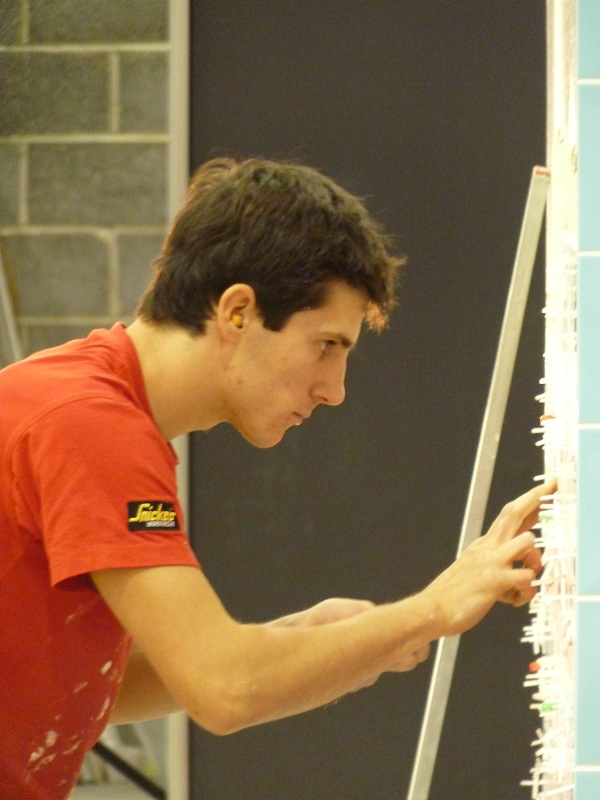
So it was great, while I was in London, to attend WorldSkills 2011 - an international competition that brought together young competitors from over 60 countries to demonstrate their abilities in skills ranging from landscape gardening to robotics. All of them are taking or have recently taken vocational qualifications, and all of them had won similar skills competitions at the national level in their own countries. Basically we are talking about some very impressive people with talent, brains and a serious work ethic.

The event was HUGE. It was the biggest event ever to be held at the Excel Centre in London, and if you've ever been there you will know that means it was massive. The logistics must have been a nightmare - the centre needed to have soil plots for the gardeners, an entire section of the exhibition with extra pipes for the plumbers, fully equipped kitchens for all the catering competitors, protective booths for the welders...I could go on. Kudos to the organisers for apparently making everything go like clockwork.

But of course the real draw was the competitors. Being someone with not a practical bone in his body, I have always been impressed by people with technical knowledge and skills. Someone who can look under the bonnet of a car and know how to make it run, or produce flawlessly designed and produced clothes, or understand exactly what building materials to use for a specific function and how, have abilities that are, to be frank, a bit of a mystery to me. Too often vocational education is dismissed, but the reality is that these skills are the result of years of hard work and dedication, and depend on an in-depth knowledge of the relevant field. 

The competitors at WorldSkills are the best of the best, and I defy anyone not to be impressed by their level of skills, or by their total concentration and dedication to their work as the crowds (including some very noisy school parties) milled past them with cameras flashing. It was a genuinely emotional experience and it reminded me that working in education means - however indirectly - helping people to achieve their dreams. There can't be many things as rewarding to do with your life.

Anyway, here are some photos of the event. Look out for the sugar sculptures made by the confectionary competitors...


Tiling, in case you were wondering!


I love the hungry gorilla....

...but the giraffe was my favourite.

The work of the Indian entrant in the hairdressing category

I never did find out how you got to volunteer to be the subject for the massage competition...

I found those fake hand things really quite creepy.


Welding! The photos didn't come out as impressive as it looked at the time.

Robotics. I'm not sure what the robot does but it looks terribly clever.


One of about 15 or so gardens that were created over a few days in the middle of the Excel centre. Brilliant.

Wednesday, 28 September 2011

Demob Happy

Goodness, it's been a long time since my last post. I feel quite ashamed. Those heady days of daily posting in the first half of September seem like a distant memory. I hope you haven't been pining without me.

A number of factors have combined to make my blogging less prolific than in the past. It's been a hectic few weeks at work, with trips to Bangalore and Kolkata as well as my first public speaking engagement in India, which was a bit of a nerve-jangler in many ways. The Bangalore trip ended up being a good deal more stressful than it needed to be after I left my beloved Kindle on the plane on the way down (I got it back, but only after a display of tenacity and, at times, tooth-bared snarling that would make your average dog with a bone creep away in embarrassment). While all this has been going on, my colleague has been less available than normal due to some family issues, so I've spent quite a bit of time trying to do two people's jobs in half the normal working time. Not only has this eaten into the time available for blogging, it's also eaten into the time available for having experiences worth blogging about (board meetings and practicing my speech just don't really cut it).

In addition to work, my first foray into the Delhi theatre scene is underway as I've begun rehearsals for my short play, which I am directing as part of the Short + Sweet festival in November. I've missed doing theatre and I'd almost forgotten how energising it can be. So far it's going OK - it's early days but my two leads are doing great work, although I don't get to enjoy the kind of facilities you lucky London theatre types do (the festival is being staged in a conference venue rather than a theatre, and the rehearsal space is my living room). Unfortunately I've just lost my third cast member, so if anyone happens to know any actresses in Delhi interested in a small but pivotal role in a short play about neurotic shop dummies planning to take over the world, just let me know...

At the same time, my domestic life has become a bit more complex following the arrival of my stuff from London. Having lived for the last couple of months living, as my landlord Mr Mehandru rather disdainfully puts it, "like a Bohemian", with minimal furniture, a suitcase full of clothes and a sleeping bag, I've been unpacking and finding a home for all of this (plus a couple of extra boxes of kitchen stuff):


I have of course had some relaxation time, but (and I know this is a crap reason for not blogging, but in the spirit of honesty) over the last month quite a lot of it has been taken up by *ahem* working through the first three seasons of Angel, which a friend of mine lent me in London and which I have to give back to him very shortly. This is because - and this is a lot of the reason why my blog rate has flagged recently - I've promised to bring them with me when I head back to London on Saturday for two weeks, followed by a few days in The Hague (which feels at least as much like home to me). It's been a bit of a race against time, but I think I've just about managed it.

The closer Saturday gets, the more I notice my thoughts focusing on things like the friends I'm going to catch up with, the cafes I'm going to go back to, and the lovely lovely lovely cold British weather (I'm totally serious) that I get to enjoy. And conversely, the less I am watching out for the quirky, the beautiful or the confusing in my immediate surroundings that make for blogworthy material.

I guess this is inevitable. I have a healthy spirit of adventure, but we all need our home comforts from time to time. Basically, my body may be in Delhi but my mind is increasingly in England. I love my palak paneer and badam milk, but right now I'd kill for a decent cup of coffee and some good cheese; the monuments of Delhi are stunning but I am missing the Victorian terraces of South London. You can still keep the tube though.

No doubt when I come back in mid-October I will rediscover my zest for all that Delhi has to offer, particularly as by then it should have begun to cool down a bit. Three and a half months of Delhi summer has made me crave chilliness like never before. I wish I had more time to get under the skin of the place though. I recently read this awesome blog about people living in the ruins in Hauz Khas and I just wish I could offer you something even a fraction as fascinating or photos the tiniest bit as gorgeous. I did pop into the bit of the ruins mentioned here, but didn't have the nerve to take any photos or to speak to the inhabitants. I guess I have a long way to go as a blogger.

Anyway, I wanted to post even though I don't have any pithy observations about India to make or encounters with eccentric locals to relate. Blogging is a tricky business and like any kind of writing the most important thing is that you are doing it. Even if every now and then that means that you end up with a kind of rambling and pointless post like this one. Bear with me. I'll get better again, I promise.


Thursday, 15 September 2011

There is a corner of some Rajasthani field...

There are probably not many boys from Manchester who can say they have a thicket of trees in Rajasthan, but as of today I am one of them:


Take note, not just a tree but a whole thicket. Things don't get done by half round here.

Anyway, this was my reward for speaking today at a national conference on skills development organised by the Federation of Indian Chambers of Commerce and Industry, in lieu of a more conventional token of appreciation. I thought this was a rather nice touch. I wonder if it's possible to visit my thicket. Probably not, sadly.

Indian audiences have incredible stamina. My presentation came at the tail end of a very long day, but the hall was still close to full and the Indian attendees all sat ramrod-straight, apparently paying close attention to the content (it has to be said that the non-Indians in the audience fared less well in this regard, and gradually sank lower and lower in their chairs as we closed in on 7 pm. I don't blame them, it was only being on a dais that was preventing me from doing the same). It was nice to have an attentive audience despite being on the graveyard shift. And a thicket to boot.

Monday, 25 July 2011

Road trip reflections

I'm writing this in a hotel in Hisar, about 140 miles west of Delhi in the state of Haryana. I'm en route to Sirsa, a town about 60 miles east of the Pakistan border, where we are involved in a project. This is my first time out of Delhi since I moved here, and only the second time I've been outside of a major city in India (the last time was in Kerala in January).

There's not an awful lot in Haryana to interest travellers. It's unrelentingly flat and agricultural, and our route here was a repetitive series of fields punctuated by identikit dusty villages. My attempt to get on with some work was thwarted by the variable quality of the roads (a couple of shuddering potholes and my stomach resolutely refused to let me look at any kind of screen or printed matter), and looking out of the window quickly lost its appeal (brightly coloured saris, playing kids and stoic cattle are all picturesque in their own way, but after a couple of hours tend to become a bit less exciting).

So maybe that's why I've been a bit reflective today. I have been thinking anyway - as I imagine has everyone - about the horrendous attacks in Norway last week, and I had ample opportunity for further ruminating on the journey here. So apologies that this post is going to be a bit glooomy, but this is what's on my mind.

I can't help but compare my reaction to the events in Oslo with my reaction to 9/11, almost exactly 10 years ago. For me, the circumstances are quite similar: in both cases I had recently arrived in a foreign country (in 2001 it was Korea, where I arrived in August), was feeling to some degree bewildered and isolated, and was staying in a large, mostly empty and somewhat cavernous apartment.

I remember very clearly watching the news coverage from the USA and feeling like the bottom had dropped out of the world. I didn't know anyone in the 9/11 attacks and I don't know anyone hurt or killed in Norway, but despite the distance of events in 2001 they provoked an extraordinarily profound sense of fear and confusion as I watched the towers fall in my lonely flat. I don't think any event before or since has shocked me to the core so utterly - even including the July 2005 bombs in London, which of course struck much closer to home.

My reaction this time has been different. Shock, yes, dismay, sympathy for those killed and their families, and concern that such awful events could happen in such an unlikely place - but my sense of horror and terror has not approached what I felt in 2001.

There are plenty of reasons. New York and Washington are, of course, iconic and familiar in a way that Oslo is not, so even though in 2001 I had only visited New York once (just as now I have only been to Oslo once) I felt that I knew it well. The sheer dramatic impact of watching those two behemoths of capitalism at the World Trade Centre topple could not but magnify the impact on people watchin events unfold. And while we didn't expect Norway to be attacked because it is largely peaceful, we didn't expect 9/11 because, at the time, the USA seems invulnerable. Both events shook what we thought we knew about the world, but the implications of 9/11 seemed mind-boggling (more so, perhaps, at the time than in hindsight, but still true today).

On a personal level, 9/11 came at a time when I was personally quite vulnerable and unhappy. I don't in any way wish to compare my experience with that of people who were directly affected by the events that day, but the loneliness and isolation I was feeling at that time seemed to double in intensity - not only was I out on my own in a strange place, but suddenly the whole world seemed a lot more strange and hostile than it had before. Of course this was mostly just a raw emotional reaction brought on by being at a difficult time in my life, but my memory of those feelings tells me they were very real. Today I am in a very different frame of mind and am much more able to deal with what the world has to throw at me.

Oddly enough, I don't think that my different reactions are down to the difference in the number of people killed in the two sets of attacks. We all know that numbers cease to mean very much beyond a certain point. It's hard to comprehend the tragedy of a thousand people being killed, and much easier to engage emotionally with one death. We just don't have the emotional resources to apply grief and horror proportionally to events of greater scale.

But my fear is that all of this rationalisation is nonsense, and that actually I've just become accustomed to random events of great violence springing up in unexpected places. I grew up in a country that was regularly the victim of terrorist attacks. All my life I have known to ask about unattended bags and, to this day, I often pop litter into my bag to dispose of at home out of habit rather than look for a rubbish bin (which were frequently absent in the UK in the 1980s as they were favoured places to plant a bomb).

But in my adult life the frequency, scale and spread of terrorist attacks has grown, and technological change has changed the nature of security threats in some terrifying directions. Attacks from Iraq to Manila, Mumbai to Oklahoma City, seem to be a standard feature of news reports today in a way I don't remember them being before (am I right here, or am I romanticising a past that has always been just as violent?)

I don't want to live my life in fear. But at the same time I don't want to lose my capacity to respond emotionally to the deaths of innocent people. If this starts to seem normal, that's when we really should be scared.

Friday, 22 July 2011

At least I've got my health

Or most of it, anyway. Truth to tell I've been feeling pretty rotten this week, even more than when I wrote this post. I'm constantly fatigued and my brain feels like it's made of mushy peas. This has come at the same time as our scheduled strategic planning process at work, when myself and my colleague Rajat are holed up in my flat plotting over my dining room table. Strategic planning is important but, my word, it can be tedious at times. So this is not the best time for simple mental processes to feel like they are more taxing than studying for my finals.

I'm still blaming the weather. Apparently the US is currently experiencing a "punishing heatwave" that has killed 22 people right now. The conditions sound very similar to Delhi (mid to high 30s and very high humidity, which the human body is not well equipped to deal with). So I guess it's not all that surprising that I'm not feeling in the peak of condition right now. However, I still have a job to do (not to mention a blog to maintain) so I am just going to have to find the energy from somewhere, ideally without resorting to stimulant drugs.

Anyway, while we're on the subject of health, here's something else I'm having to get used to: the possibility of contracting a tropical nasty. Delhi is not too bad health-wise but one thing I do have to watch out for is mosquitoes. It's not that the city is teeming with them, but the ones that are around have a significant chance of carrying some deeply unpleasant bugs in their evil little saliva glands.

Malaria is mainly a rural problem in India, but the cities do not escape. At least as worrying (and probably more so, given the descriptions of the frankly horrific-sounding symptomps) are Dengue fever and Chikungunya, one of which is nicknamed "breakbone fever" for the horrific pain it inflicts, while the name of the other translates as "that which bends up", after the contorted positions assumed by the poor buggers who pick it up. (This emphasis on pain in the bone and joints made me panic a bit at the touch of back pain I have been experiencing this week, but I'm pretty sure it has more to do with the horrible chair I sit on in the office.)

I really, really don't want to get any of these diseases. The chances are I won't - at least in the case of Chikungunya, which records a few dozen victims in the city each year. Not bad for a city of 17 million. Malaria cases number a few hundred each year. Dengue, on the other hand, is much more prevalent, with around 6,000 victims last year.

Still not too bad odds, but enough to make you more than usually worried about the mozzies. This has also been drummed into me by my landlord, who is positively convinced that I am certain to succumb to one of these horrible diseases. He's not totally without cause. There is an open drain running through the middle of Defence Colony, which is currently in the process of being covered (when finished it is due to become a large and hopefully lovely park). For the moment, though, it's not just a breeding ground for mosquitoes, it's a breeding ground that is constantly being disrupted and disturbed by dozens of working men.

So there are plenty of mozzies around. The little buggers have also got every angle covered. While malaria mosquitoes attack during the night, dengue and chikungunya-carrying ones favour daytime snacking. So you can never relax. Long trousers, liberal use of insect repellent, and regular spraying of one's flat are the order of the day. Despite these precautions, I've picked up three or four bites since I moved here.

The most evil life form known to man?

Most of the cases of these diseases, of course, tend to be found in slums of the city where conditions are poor and people can't afford the kind of precautions I am able to take. So with a bit of care I should make it through my time here without enduring weeks of horrendous pain (horn honking-induced headaches excepted).

Meanwhile, I just have to learn to live with this kind of threat. My Indian colleagues find it amusing that I'm unable to endure a mosquito in the office - it has to be squished as soon as I'm aware of its presence. Which goes to show, of course, that statistically they are really not that much of a threat, and most people from Delhi barely give them a second's thought.

On the other hand, you never know. So I'll keep smearing on that repellent for the foreseeable future.